What should I do first if sewage is backing up into my house?
Stop using all water right away. Do not flush or run drains. Keep children and pets away from the area, wear gloves if you must go in, and request an estimate from a local provider.
Request an estimate to start
Your sewer line is the big pipe that carries waste from your house to the city main or a septic tank. When it cracks, clogs, or collapses, sewage can back up into your home. That is messy and unsafe, but it is fixable.
Stormlength Plumbing is a referral service. The repair work is done by independent providers, not by Stormlength Plumbing. You tell us what is happening, and we pass your request to providers in our network. You compare, ask questions, and choose. This page walks you through the first hour, the signs of a failing line, how providers find the problem, the repair options, and what to ask before you agree to anything. A written quote before work starts is the rule to hold onto.
Take a breath. Sewage in the house feels awful, but the first hour is simple. Do these things in order.
Stop all water use. Do not flush. Do not run sinks, showers, the dishwasher, or the washer. Every drop you send down has nowhere to go.
Sewage carries germs. Keep children and pets out of the wet area. Wear rubber gloves and boots if you must go in. Open a window if the smell is strong.
If water is near outlets or cords, stay out. Do not stand in water to reach a panel. If you are unsure, leave the area and ask an electrician for help.
Some signs are loud. Others are quiet and easy to miss.
One slow sink is usually a small clog. Many slow drains at once point to the main line.
Most damage builds up slowly. Here are the usual causes.
Hot, humid summers and heavy thunderstorms can swell the soil and stress buried pipes. Storm water can also push into a cracked line.
Good repair starts with a clear diagnosis. Ask the provider to show you what they find.
A provider feeds a small waterproof camera into the pipe. You can watch the screen. It shows cracks, roots, sags, and breaks.
A tool on the camera sends a signal. The provider tracks it above ground and marks the spot. That tells you how deep the pipe is and how much digging, if any, is needed.
Sometimes the line needs to be cleared before the camera can see. This is part of blocked pipe services. Ask if clearing is a separate line on the quote.
The right fix depends on what the camera shows. Ask the provider why they picked it.
If only one section is damaged, a provider can dig a small hole and replace that piece. This often suits a single crack or a root break.
A soft liner coated in resin goes inside the old pipe. It hardens into a new pipe within the old one. Digging is small. This is called trenchless repair.
A tool pulls a new pipe through the old one while breaking the old pipe apart. It also needs little digging.
If the pipe has collapsed or sags badly, the provider may dig a trench and lay a new line. It is the most work, but it can be the right choice.
Houses on a slab have pipes under the floor. Houses over a crawl space may have pipes you can reach from below. That changes the plan, so tell the provider which you have.
Many towns require a permit for sewer work. The provider usually handles the paperwork, but ask who does it. Also ask who owns which part of the pipe. In many places, you own the pipe from your house to the property line. The city may own the rest. Your local utility office can confirm this.
Some policies may cover sudden damage, but many do not cover wear or roots. Check your policy. Providers can often help document damage for a claim. Take photos before cleanup and keep every receipt.
Stormlength Plumbing takes your request and passes it to providers in our network. Providers do the work. They set their own prices, schedules, and hours, and those vary. You choose who to hire, and you owe nothing to Stormlength Plumbing for making the request. There is no obligation.
A small camera shows what is wrong inside the pipe so you can see the problem yourself.
A provider replaces one damaged section when the rest of the line is still in good shape.
Lining or pipe bursting can fix a line with little digging in your yard.
When a pipe has collapsed, a provider can lay a new line from house to main.
Prices vary by pipe depth, length, soil, and access. These are typical U.S. ranges only. Your own job may cost more or less, so always ask for a written quote before work starts.
| Item | Typical range | Notes |
|---|---|---|
| Camera inspection | $100 – $500 | Often needed before any repair quote |
| Main line clearing | $150 – $600 | Clears clogs, does not fix cracks |
| Spot repair | $1,000 – $4,000 | Depends on depth and digging |
| Pipe lining | $4,000 – $12,000 | Price rises with pipe length |
| Pipe bursting | $3,000 – $15,000 | Needs access points at each end |
| Full replacement | $3,000 – $25,000 | Driveways and trees raise the price |
Stop all water use, keep people away from the wet area, and take a few photos.
Tell us what you see and where you live. It takes a few minutes.
Providers in our network may reach out. Ask about availability and a written quote.
Pick a provider, read the quote, and say yes only when it makes sense.
You send one request. We pass it to local providers in our network.
Compare providers and quotes, then pick the one that fits your home and budget.
Ask for a written quote first. Providers explain the plan and the price before they begin.
Providers do the work. We only connect you with them and never touch your pipes.
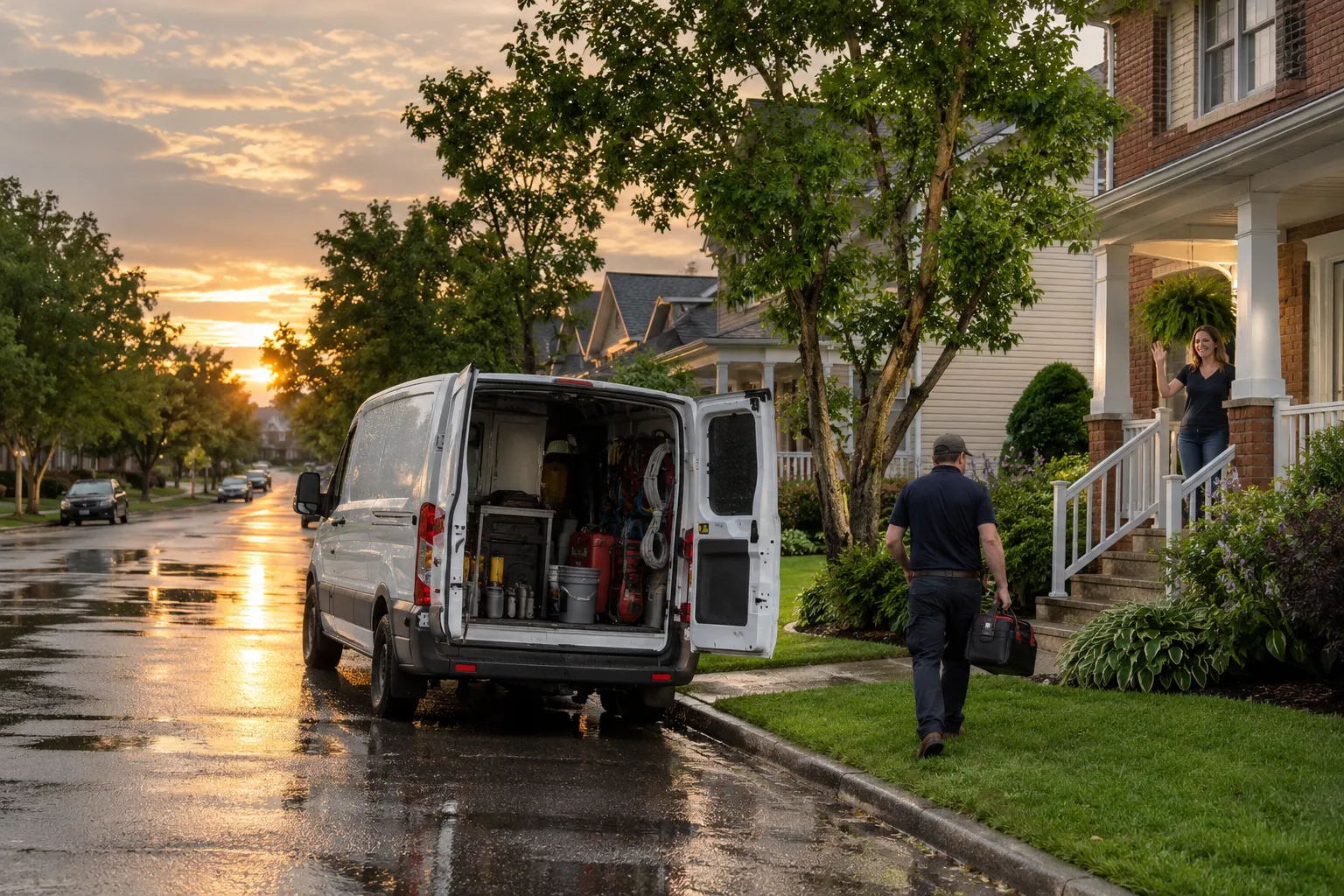
Tell us what is going on. Request an estimate and we will pass it to a local provider in our network. You decide what happens next.
No obligationStop using all water right away. Do not flush or run drains. Keep children and pets away from the area, wear gloves if you must go in, and request an estimate from a local provider.
If more than one drain is slow or backing up, the main line is a likely cause. Gurgling toilets and a sewer smell in the yard are other clues. A camera inspection can confirm it.
It depends on your policy. Some policies may cover sudden damage, but many do not cover wear, age, or roots. Read your policy and ask your insurer. Providers can often help document damage for a claim.
Tell us what is going on. Request an estimate and we will pass it to a local provider in our network. You decide what happens next.
No obligation